On this page
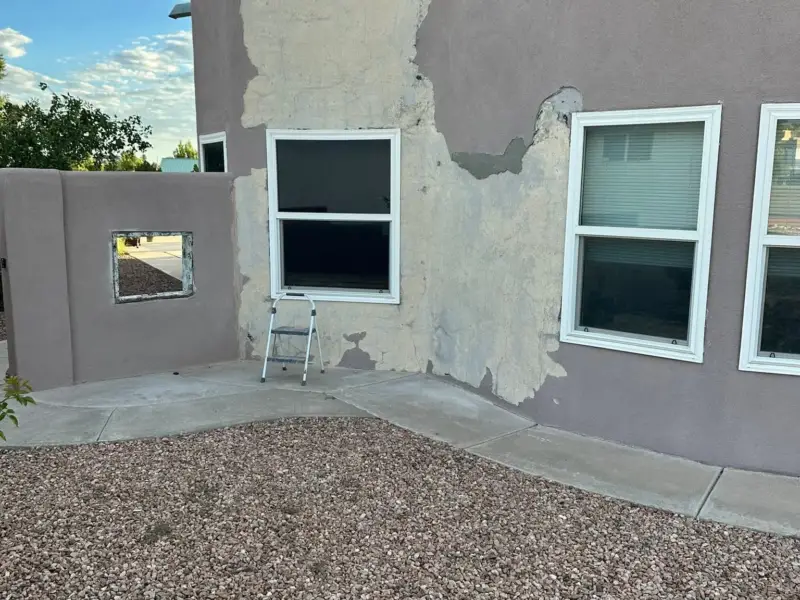
You lean a ladder against the wall and it leaves a dent. Or you knock on the stucco and it sounds soft instead of solid. There is a good chance your home has synthetic stucco, often called EIFS or by the brand name Dryvit. It needs a different kind of repair than traditional stucco.
EIFS and Dryvit repair in Albuquerque
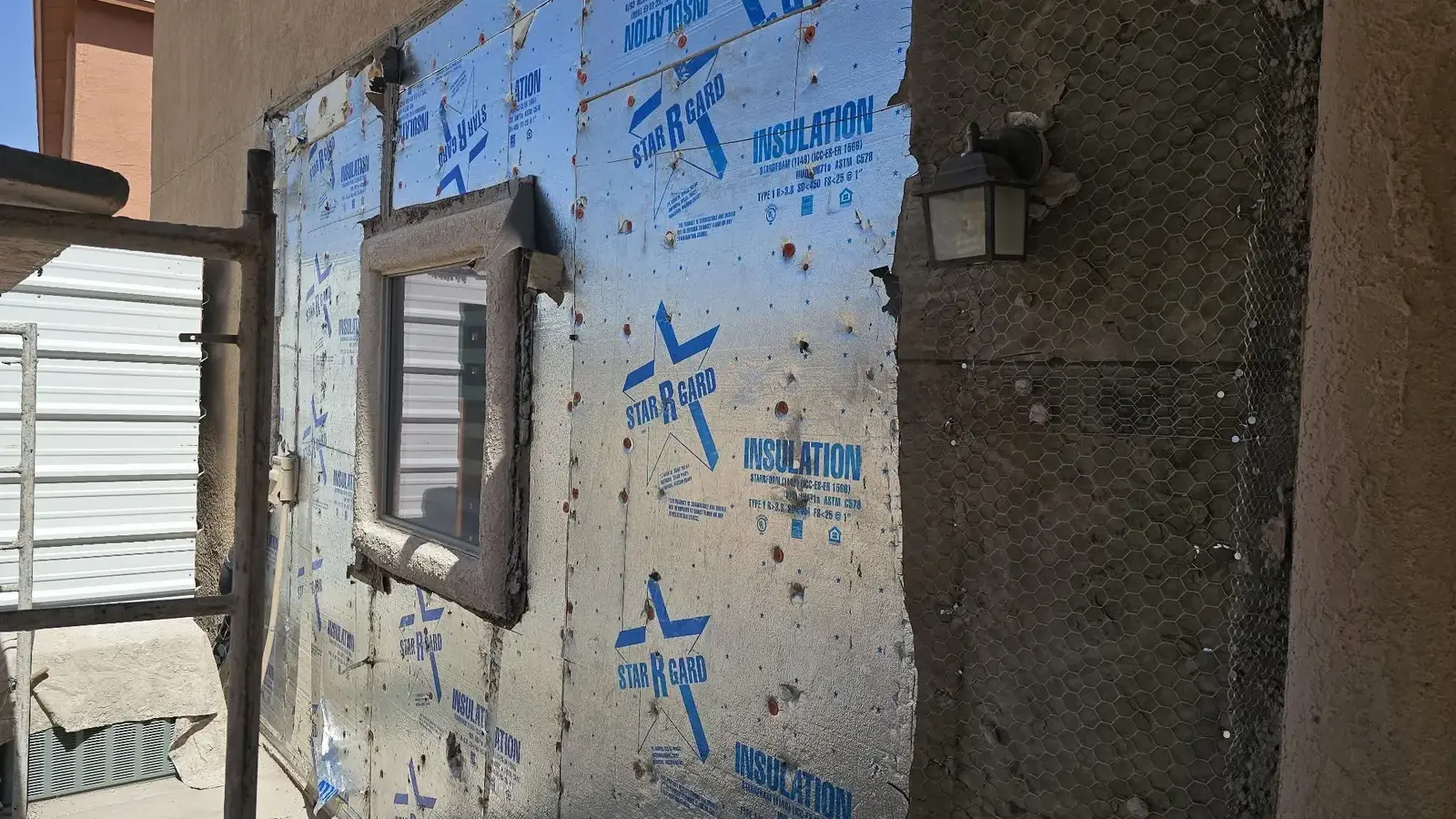
EIFS stands for exterior insulation and finish system. Instead of cement over wire lath, it uses foam insulation board attached to the wall, a base coat with fiberglass mesh pressed into it, and a thin acrylic finish on top. It was popular on homes and commercial buildings built from the 1980s onward because it insulates well and allows crisp shapes and trim.
The downside is that it is softer than cement stucco, and older barrier-style systems had no built-in way to let water drain out if it got behind the foam. Repairs have to respect how the system works, or they fail fast.
How can you tell if your house has synthetic stucco?
A few quick checks usually give it away:
- Tap the wall with your knuckle. Synthetic stucco sounds hollow and feels slightly soft. Cement stucco feels hard and solid.
- Press firmly with your thumb. EIFS may flex a little. Cement stucco will not.
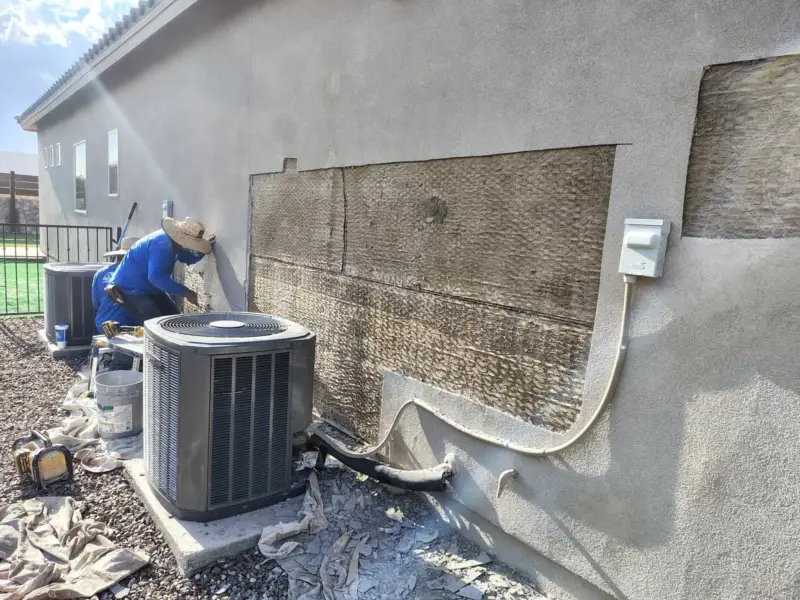
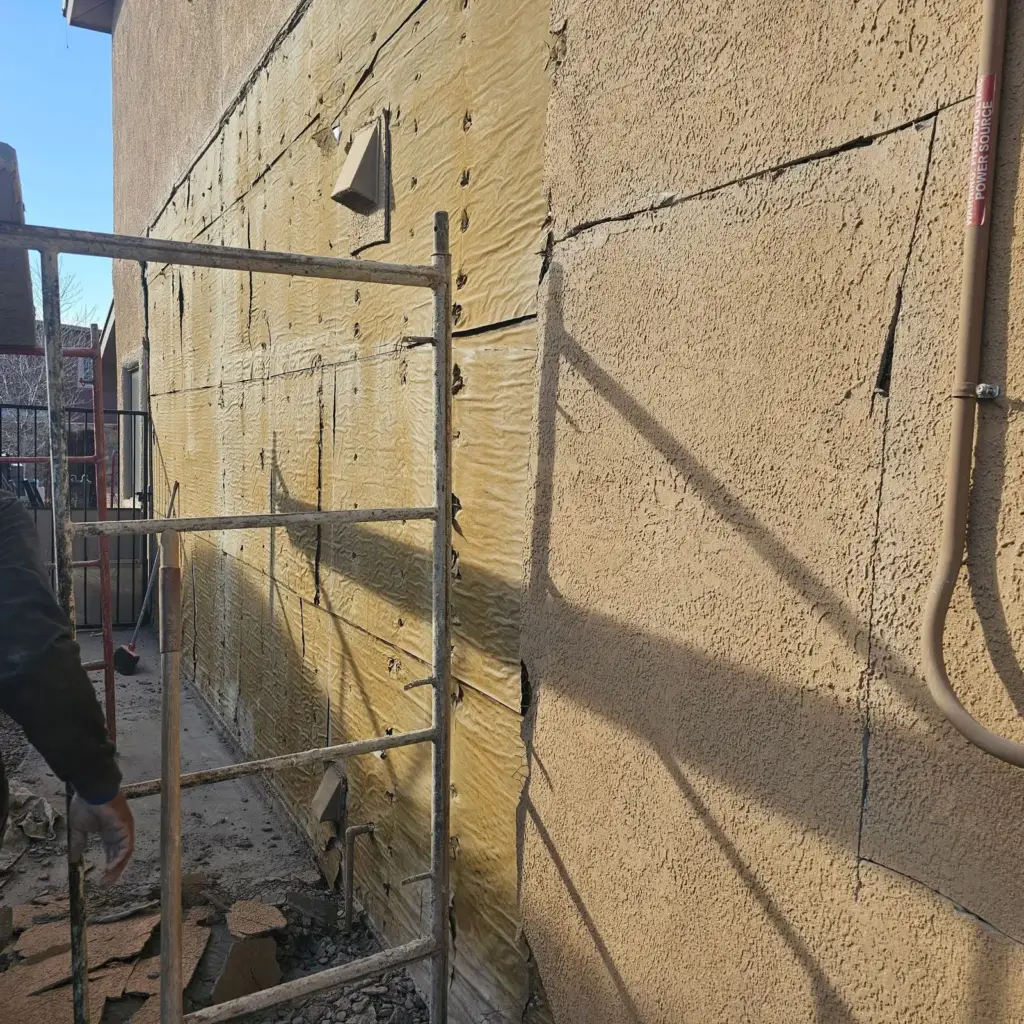
- Look where the wall meets the ground, around light fixtures, or at any damaged spot. White or pink foam behind the finish means EIFS.
- Check the trim. Crisp foam bands, keystones and window surrounds often mean a foam-based system.
If you are not sure, we can tell you during a visit.
Common synthetic stucco problems
Most EIFS repairs we see fall into a few groups:
- Dents and holes from ladders, balls, hail or lawn equipment
- Cracks at the joints between foam boards
- Finish coat peeling or delaminating from the base coat
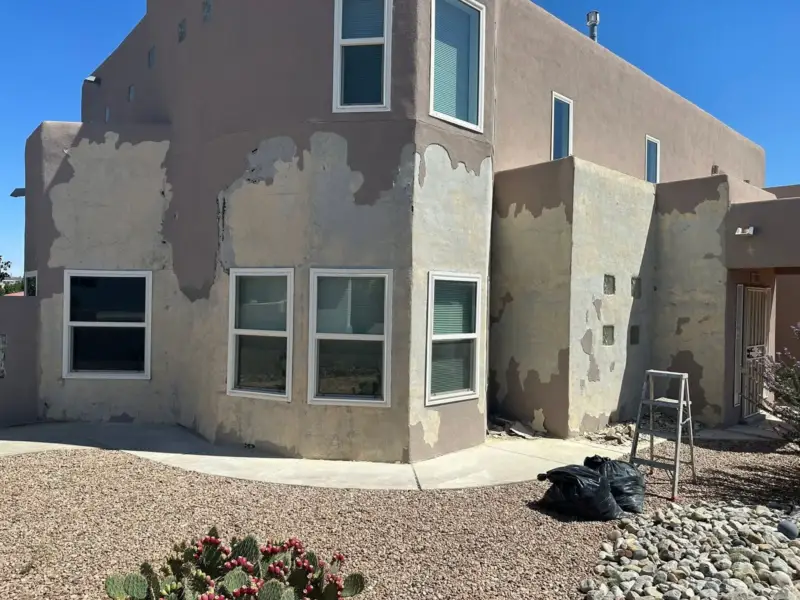
- Soft spots where water got behind the foam and damaged the sheathing
- Failed sealant around windows, doors and penetrations
How we repair EIFS and Dryvit
A lasting synthetic stucco repair follows the layers of the system:
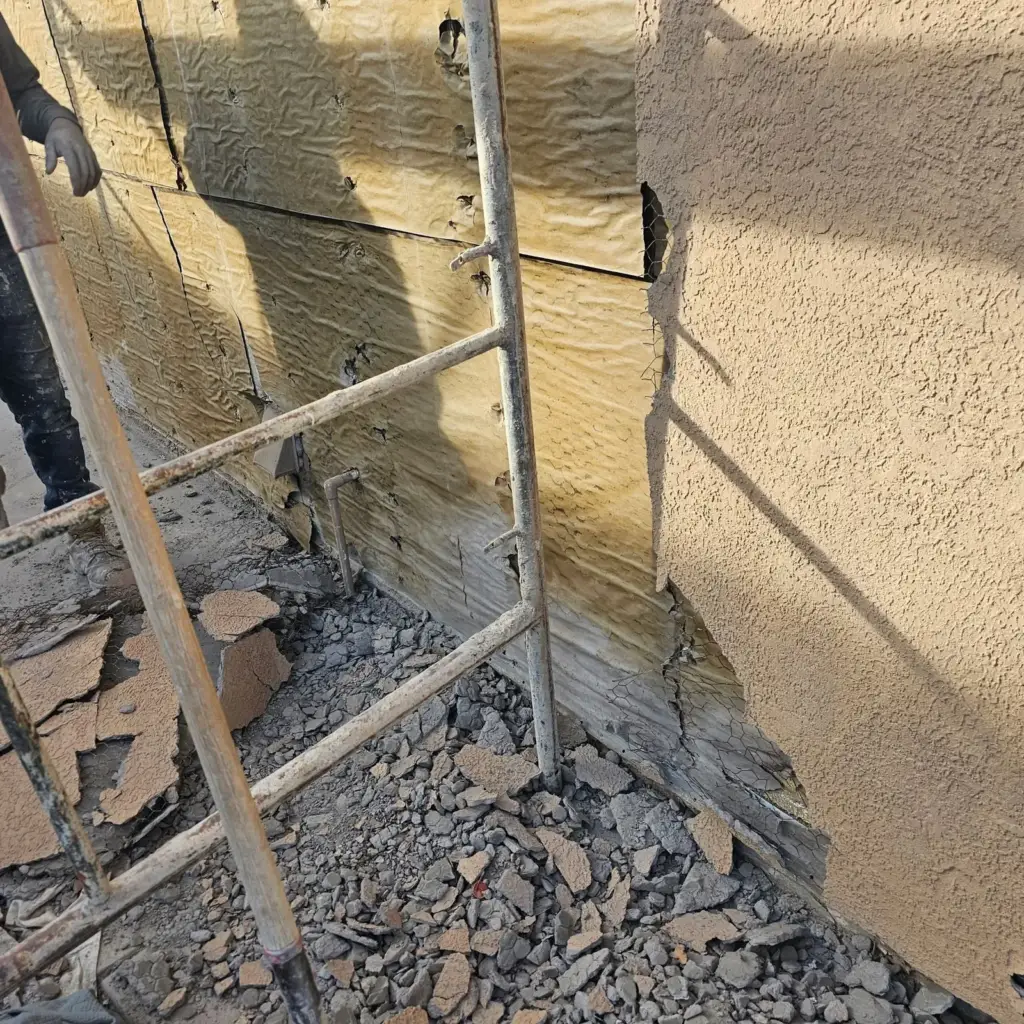
- We cut out the damaged area in a clean square or rectangle.
- We check the sheathing behind it for moisture or rot and fix it if needed.
- We glue in new foam board and rasp it flush with the wall.
- We apply base coat and embed new reinforcing mesh, overlapping the old mesh so the patch ties in.
- We apply a finish coat that matches the texture and color of the existing wall.
- We reseal joints around windows and doors with the right sealant, not caulk that will crack.
Using cement patch on EIFS is a common mistake. It does not bond well to foam and cracks at the edges. Matching the system is what keeps the repair from showing and failing.
Repair or replace synthetic stucco?
Spot damage like dents, holes and small cracks is almost always a repair. When moisture has spread behind large areas, when the finish is delaminating across whole walls, or when the sheathing is soft in many spots, replacing sections or converting to a drainage system can be the better long-term choice. A stucco inspection with moisture readings is the best way to know before you decide.
Barrier EIFS vs drainage EIFS
Older synthetic stucco, the kind on many homes built in the 1980s and 1990s, is usually barrier EIFS. It relies on the outer surface and sealants to keep every drop of water out. Newer systems add a drainage layer behind the foam, often a water-resistant barrier with grooves or a mesh gap, so any water that gets in can run down and out. When we repair large areas of older barrier EIFS, adding drainage and proper flashing at windows is one of the best upgrades you can make.
Repairs around windows and doors
Most EIFS water problems start at the edges of windows and doors. The foam stops a small distance from the frame, and that gap is filled with sealant. Sealant dries out and cracks in the high desert sun, and once it fails, water runs straight behind the foam. We cut out failed sealant, check the area behind it, and reseal with a backer rod and a sealant rated for EIFS so it can move with the wall.
Why moisture is the real concern
The foam itself does not rot. The problem is the wood sheathing and framing behind it. If water gets in at a window corner or a cracked joint and cannot drain, it can sit against the wood for a long time. Albuquerque’s dry climate helps, but monsoon storms and sprinklers hitting the wall can still soak in. Signs to watch for include stains below windows, bubbling finish, and soft spots near the ground.
Keep sprinklers and drip lines from spraying EIFS walls, and keep soil and mulch a few inches below where the foam ends. Foam that sits in wet soil soaks up water.
Local tip
We repair EIFS, Dryvit and acrylic stucco across Albuquerque and nearby towns. If your home has traditional cement stucco instead, see stucco crack repair.