On this page
A brown stain shows up under a window after a summer storm. Or the stucco near the ground starts to bubble and flake. Those are the kinds of signs that make homeowners wonder what is going on inside the wall. A stucco inspection answers that question before a small leak becomes a big repair.
Stucco inspections for Albuquerque homes
Most stucco problems start with water. Albuquerque does not get much rain in a year, but a lot of it arrives at once during the summer monsoon, and snowmelt and sprinklers add more. When water gets past the stucco at a window corner, a parapet or a cracked spot, it can soak the lath and wood sheathing behind it. From the outside, you may only see a small stain.
What are the signs of water behind stucco?
Walk around your home and look for:
- Dark stains or streaks running down from windows, doors or roof lines
- White, chalky deposits called efflorescence, left behind as water evaporates
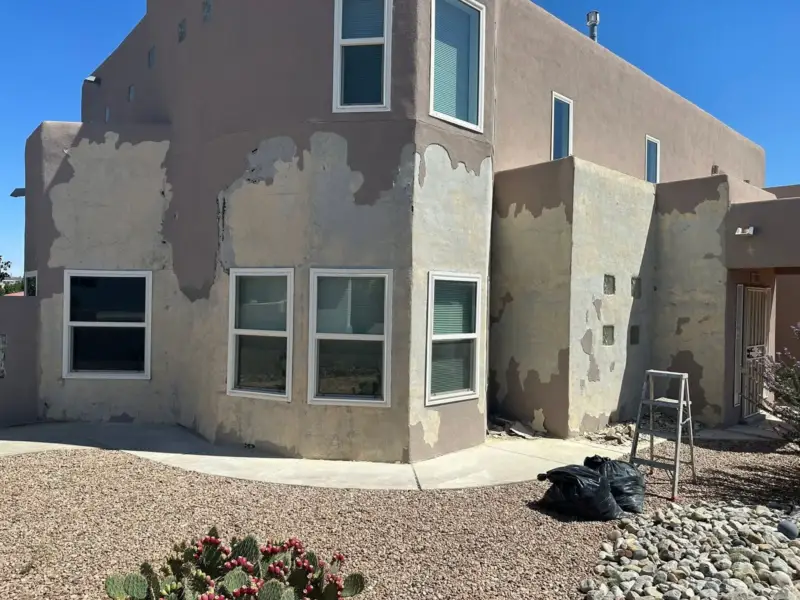
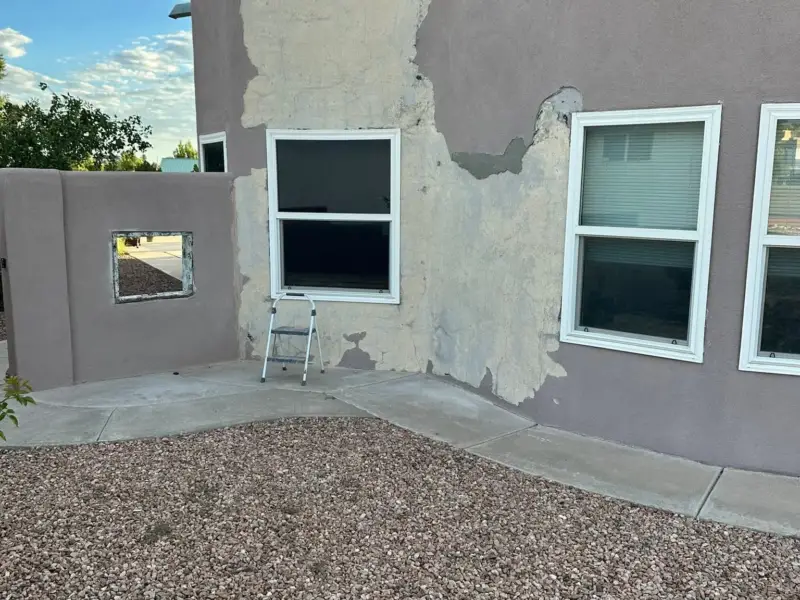
- Bubbling, blistering or peeling finish
- Soft or crumbly stucco that gives when pressed
- Cracks that stay darker than the wall after rain
- Stains on interior drywall or baseboards along outside walls
- Rusty streaks from lath or fasteners corroding inside the wall
What does a stucco inspection include?
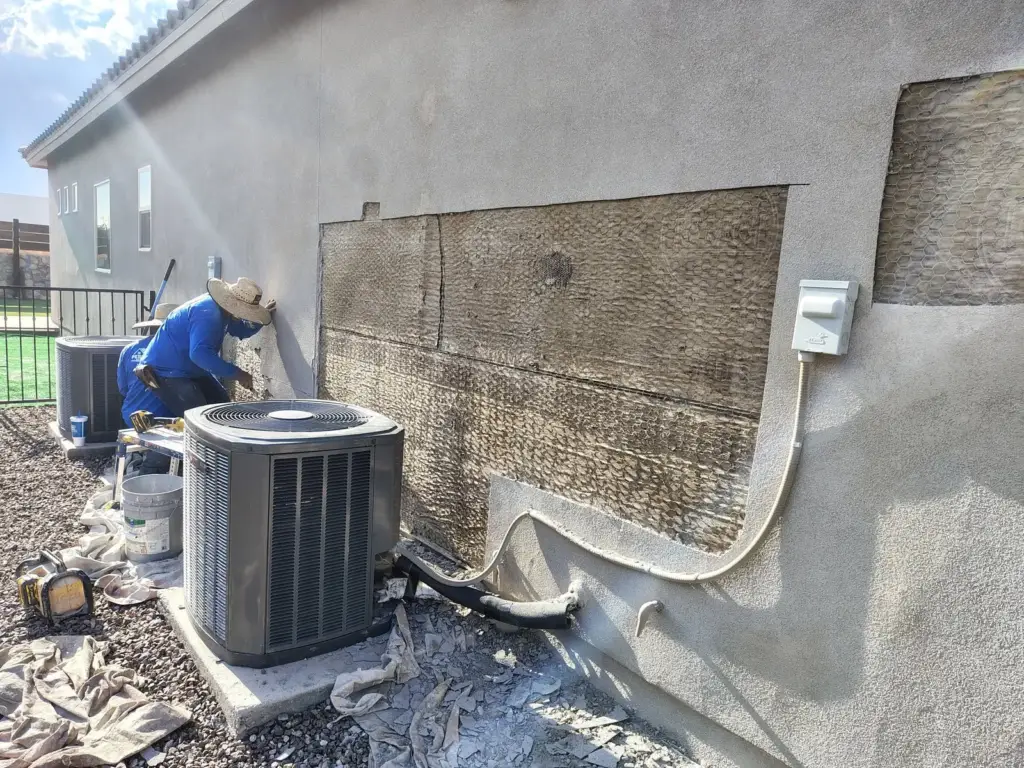
A thorough inspection has two parts. First is a visual check of every wall. We look at cracks, window and door seals, the bottom edge of the stucco, parapets, roof-to-wall joints, light fixtures and any place something passes through the wall.
Second is moisture testing. A non-invasive moisture meter scans the surface for readings that stand out. Where we need a clearer answer, probe testing uses small holes to measure moisture in the sheathing itself. Those holes are sealed afterward. You get a written summary of what we found and what we recommend, with photos.
How much does a stucco inspection cost?
It depends on the size of the home, how many walls need moisture testing, and whether probe testing is needed. A visual check with surface scanning costs much less than a full invasive test. Our stucco repair cost guide explains what drives the price, and we give you the cost in writing before we start.
Stucco water damage repair and remediation
When an inspection finds damage, remediation fixes it from the inside out:
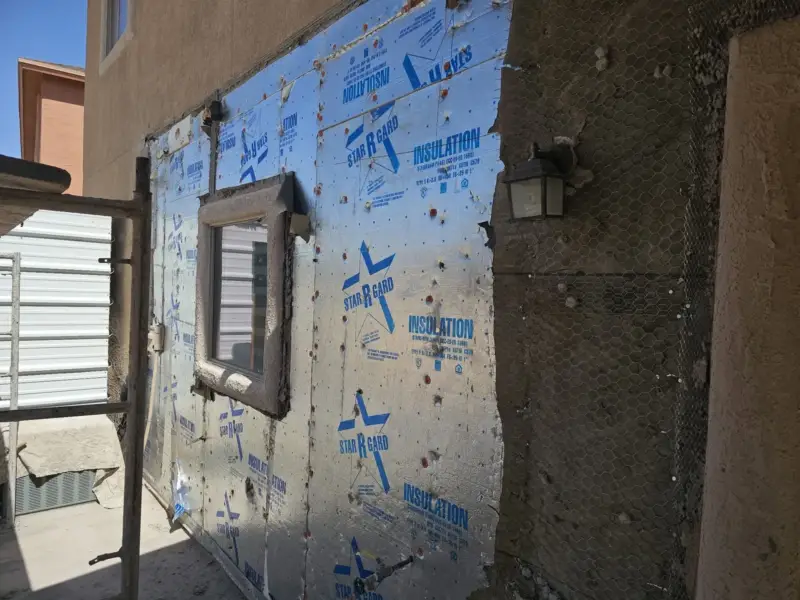
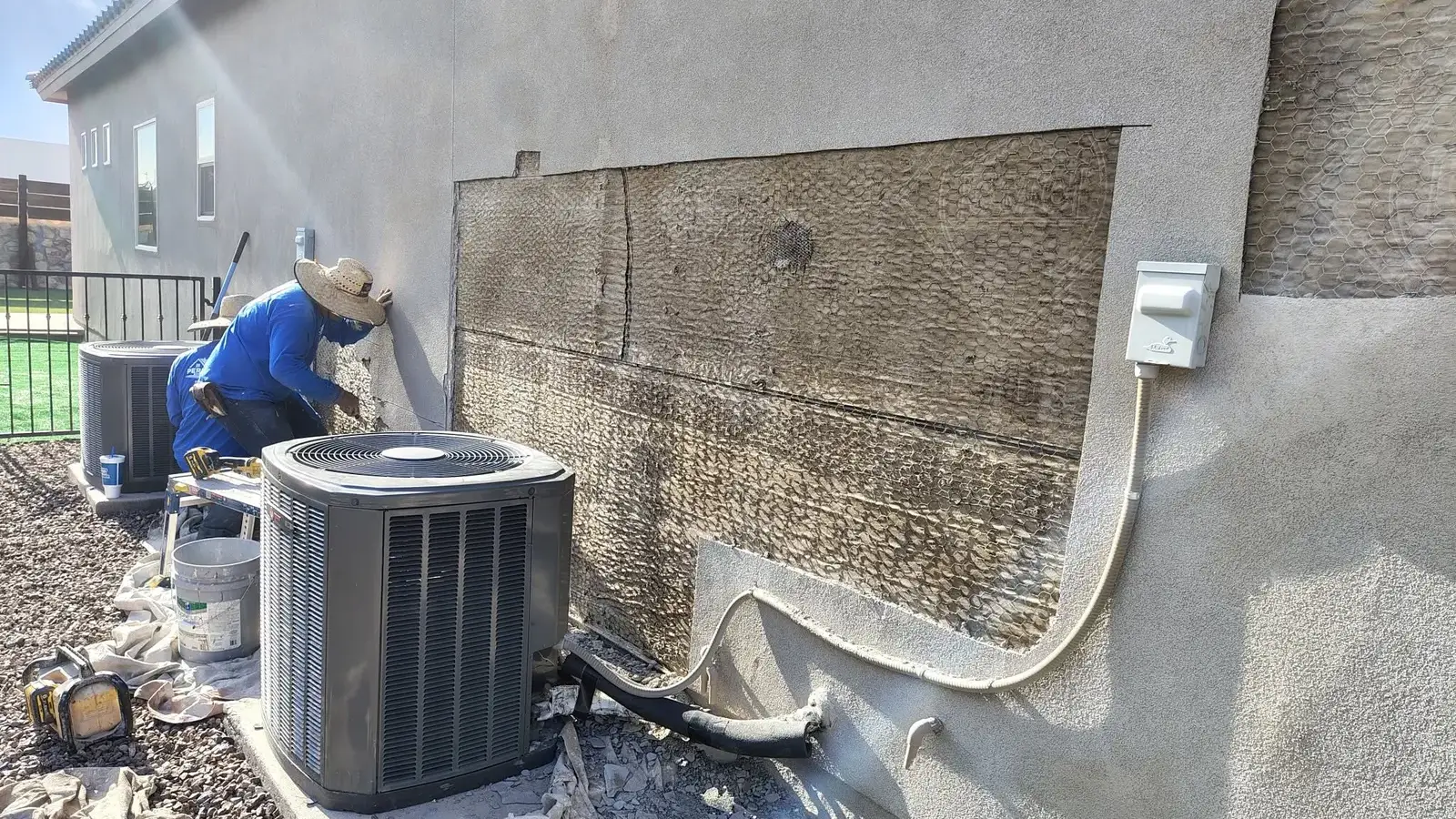
- We remove stucco in the wet area until we reach dry, solid material.
- We replace rotted sheathing or framing if the water reached it.
- We add new weather barrier and flashing where it failed, especially at windows and parapets.
- We install new lath and rebuild the stucco coats.
- We match the finish and color so the repair blends into the wall.
Fixing the entry point matters more than anything else. A patch that covers water damage without fixing where the water got in will fail again.
What happens after the inspection
You get a written summary with photos of every problem area, moisture readings where we took them, and a plain-language explanation of what each finding means. We rank the issues by urgency: things to fix before the next storm, things to plan for, and things to simply watch. If repairs are needed, the report doubles as the scope for your estimate, so you know exactly what is being fixed and why.
Moisture meter scans vs probe testing
A surface moisture meter is quick and leaves no marks. It is good for finding areas that stand out from the rest of the wall, but it only reads near the surface. Probe testing goes further. Small holes let a probe measure moisture in the sheathing behind the stucco, which is where rot actually happens. We use surface scans to find suspect areas and probes to confirm them, then seal every probe hole so it does not become a new leak.
Should you get a stucco inspection before buying a home?
If you are buying a stucco home, especially one with synthetic stucco or a flat roof with parapets, a stucco inspection is worth considering. A general home inspection usually looks only at the surface. Moisture problems behind stucco can be expensive, and knowing about them before closing gives you options. It is also useful before a re-stucco or repaint, since new coatings should not go over a wet wall.
Where water usually gets in
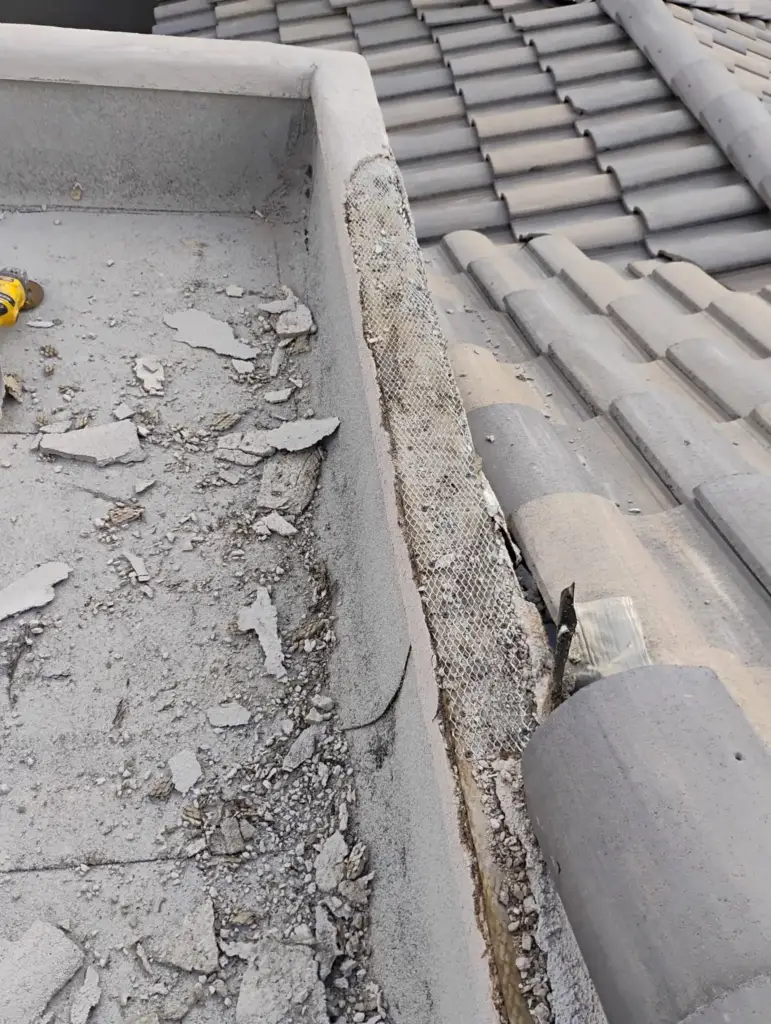
In Albuquerque, we most often trace water to a few spots: parapet caps and the joint where the roof meets the parapet, window corners with failed sealant, the bottom edge of the stucco where it meets soil or pavement, and anywhere sprinklers hit the wall every day. Canales that drip against the wall instead of throwing water clear are another common source.
Right after a monsoon storm, walk around the house and look at the walls. Areas that stay dark long after the rest of the wall has dried are worth checking.
Local tip
We inspect stucco and repair water damage across Albuquerque, Rio Rancho, Corrales, Los Lunas and Belen. If your home has foam-backed stucco, see EIFS and Dryvit repair. For roof-line leaks, see parapet repair.