On this page
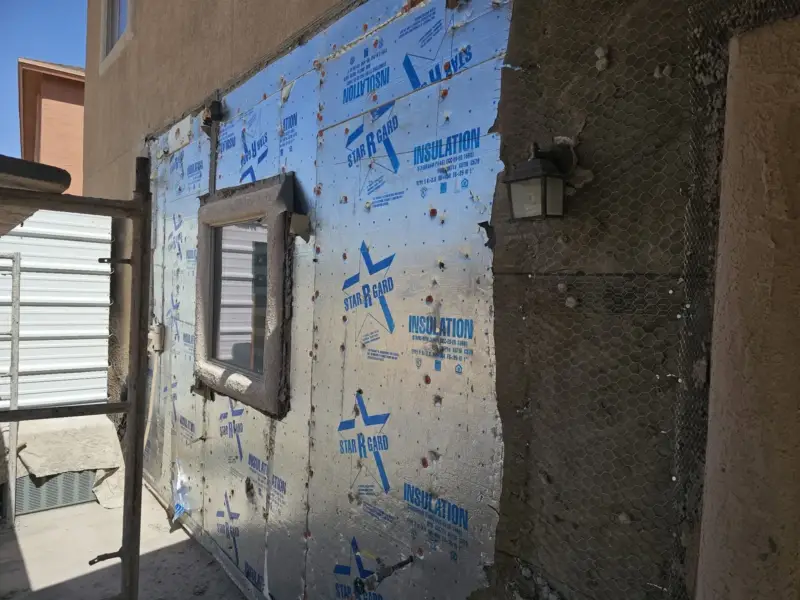
The front of your house used to be a warm tan. Now the sunny side is pale and chalky, and small cracks show through. A fresh coat can bring the color back and protect the stucco, but only if the right product goes on over a properly prepared wall.
Stucco painting in Albuquerque
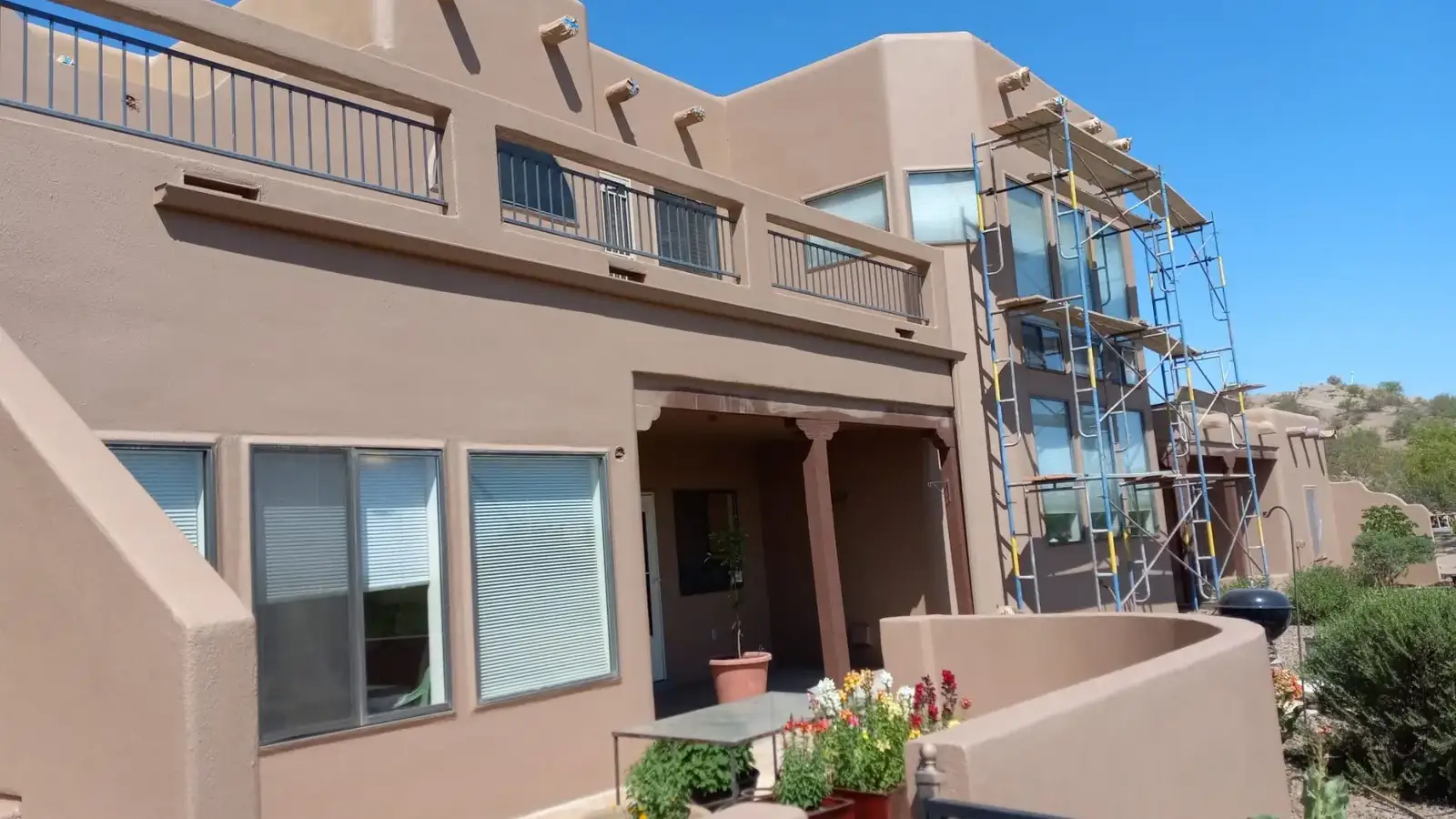
Albuquerque sun is hard on color. At over a mile high, the air is thin and the UV is strong, so pigments fade and finishes chalk faster than they would in many other places. Painting stucco restores the color and adds a protective layer. On walls with many hairline cracks, an elastomeric coating can bridge them and help keep water out.
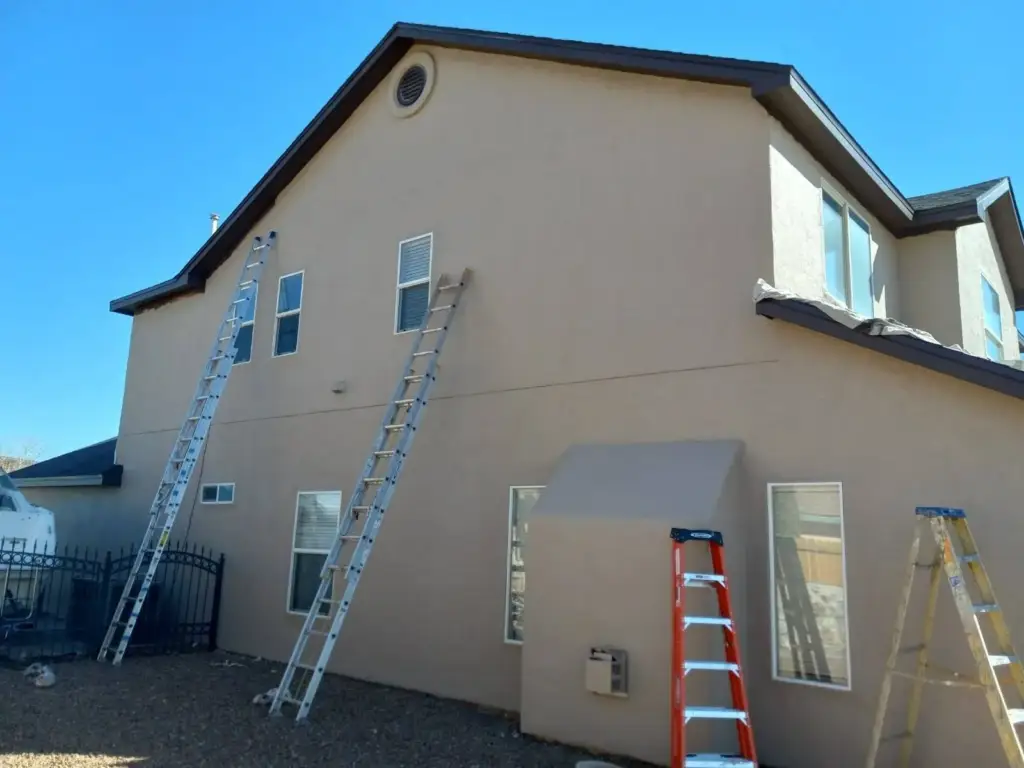
Can you paint stucco, or should you re-color coat it?
Both give you a fresh, even color, but they work differently. A color coat is a thin layer of stucco with the color mixed in. It breathes like the rest of the wall and will not peel. Paint and elastomeric coatings form a film on the surface. They come in far more colors and can bridge small cracks, but once a wall is painted, it will need repainting in the future.
If your stucco has never been painted and is in good shape, a color coat is often the simplest choice. If it has been painted before, or has many fine cracks, a quality paint or elastomeric coating usually makes more sense.
| Compare | Color coat | Paint | Elastomeric coating |
|---|---|---|---|
| What it is | Thin stucco with color mixed in | Acrylic masonry paint | Thick, flexible coating |
| Bridges hairline cracks | No | A little | Yes |
| Lets the wall breathe | Yes | Mostly | Less than the others |
| Can it peel | No, it is part of the wall | Yes, over time | Yes, if water gets behind it |
| Best for | Stucco that has never been painted | Walls already painted, or a new color | Sound walls with many fine cracks |
What is elastomeric coating and does it stop cracks?
Elastomeric coating is a thick, flexible paint that stretches as the wall moves with daily heating and cooling. Because it goes on much thicker than regular paint, it can bridge hairline cracks and keep rain out. It will not fix wide or structural cracks, so those get repaired first.
There is one caution. Elastomeric coatings resist water well, which also means they can slow moisture from escaping. On walls that already have water inside them, a heavy coating can trap it. That is why we check for moisture problems before recommending one.
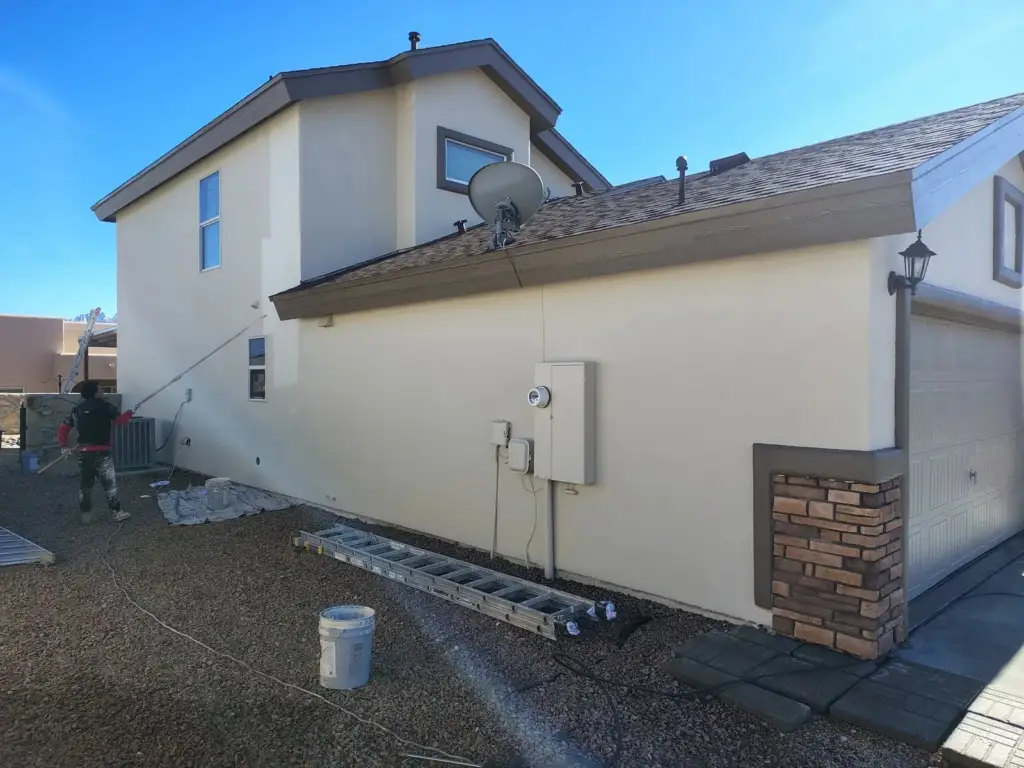
How we prep and paint exterior stucco
Most stucco paint jobs that fail do so because of poor prep. Our process:
- We clean the walls to remove dust, chalk and dirt so the coating can bond.
- We repair cracks and damaged spots and let the patches cure.
- We seal gaps around windows, doors and trim.
- We prime where the surface needs it, such as fresh patches or chalky areas.
- We apply the coating at the right thickness, by spray and back-rolling or brushing into the texture.
- We clean up and walk the finished walls with you.
How long does paint last on stucco in the high desert?
It depends on the product, the prep, the color and which way the wall faces. South and west walls take the most sun and fade first. Quality coatings over good prep can last many years before they need refreshing. Lighter colors tend to hold up better than very dark ones, which absorb more heat.
Breathable coatings vs elastomeric coatings
Not every stucco wall should get the same coating. Breathable masonry paints and mineral finishes let water vapor pass through, which is helpful on older walls, adobe-style homes and any wall that has had moisture problems. Elastomeric coatings are thicker and more water resistant, which is great for bridging fine cracks on sound, dry walls. On many homes the right answer is a mix: elastomeric on crack-prone walls that are dry, and a breathable finish where the wall needs to dry out.
Choosing the best exterior paint for stucco
The best exterior paint for stucco in Albuquerque is one made for masonry that can breathe and handle strong UV. Standard exterior stucco paint is a 100% acrylic masonry paint, while elastomeric paint for stucco is thicker and stretches over hairline cracks. Exterior stucco texture paint adds grit to hide patches and uneven areas.
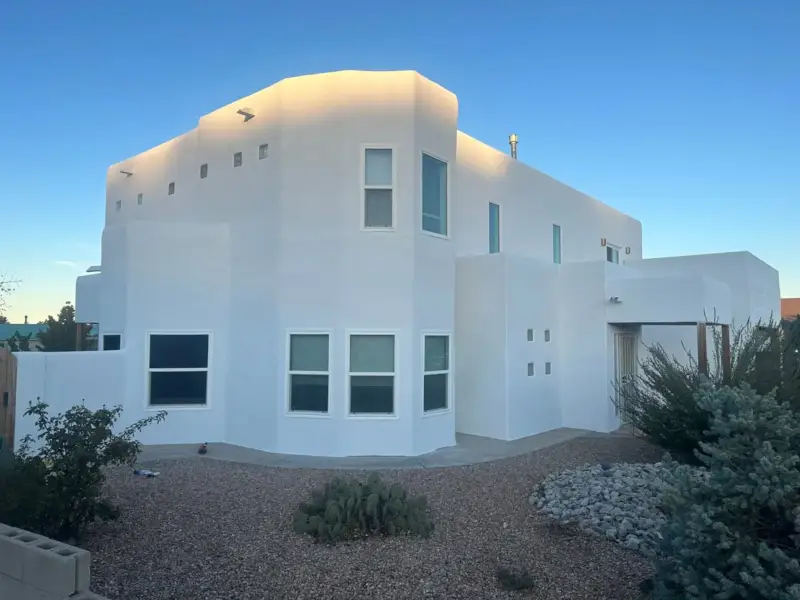
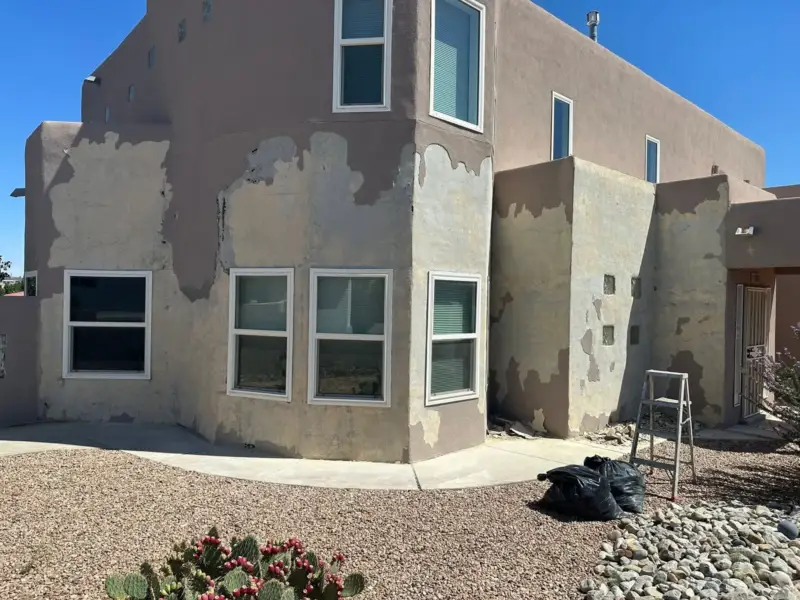
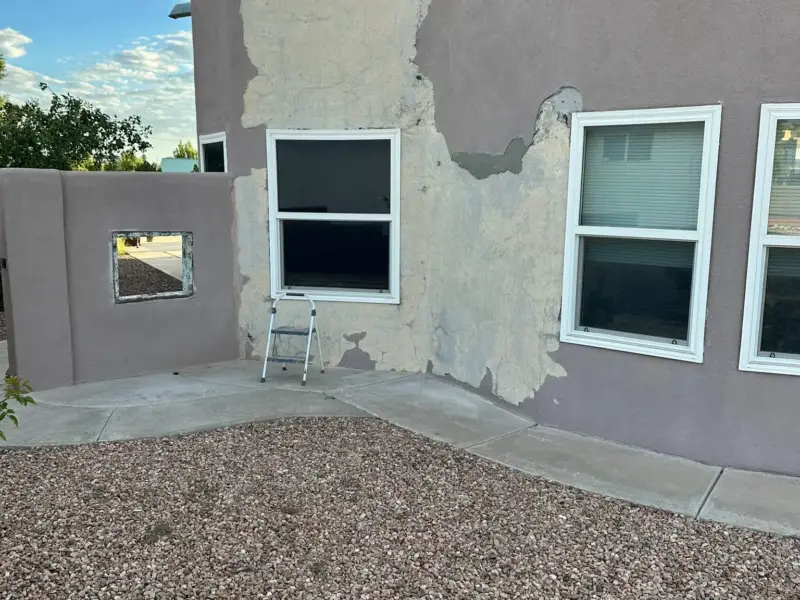
Which exterior paint for stucco is right depends on the wall. Elastomeric is great over sound stucco with fine cracks, but it can trap moisture on walls that are already wet, so we check first. Repainting stucco exterior walls lasts longest when cracks are repaired and loose paint is removed before the first coat. See stucco crack repair and our before and after photos.
Common stucco paint problems
- Peeling, when paint went on over dirt, chalk or a damp wall
- Blistering, when moisture behind the paint pushes it off
- Cracks showing through, when cracks were painted over instead of repaired
- Uneven color, when patches were not primed and absorbed the paint differently
- Fast fading, when a low-grade paint was used on a sunny wall
Most of these come down to prep, which is why we spend as much time preparing the wall as painting it.
Picking a stucco color
Warm earth tones are the classic choice in Albuquerque and fit Pueblo and Territorial styles. Many HOAs have approved color lists, so check yours first. Try a large sample on the wall and look at it morning, noon and late afternoon. The same color can look very different in New Mexico light. If you are matching an existing color after repairs, we can match it closely so the repaired areas blend in.
Rub your hand on a sunny wall. If it comes away covered in colored powder, the finish is chalking, and it is a good time to clean and recoat before the stucco underneath starts to wear.
Local tip
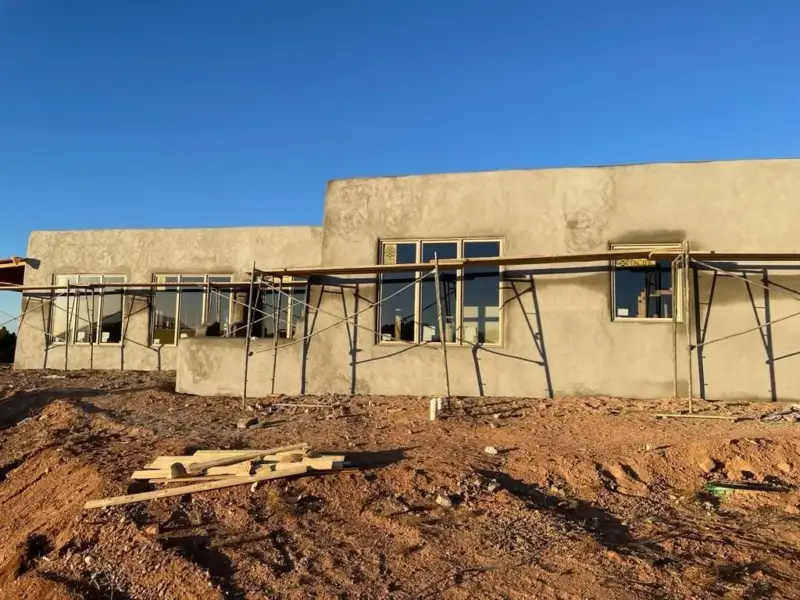
We paint stucco and apply elastomeric coatings across Albuquerque and nearby towns, including Rio Rancho, Corrales, Los Lunas and Belen. If your walls need more than a fresh coat, see stucco crack repair or re-stucco and resurfacing.
Many painters coat stucco, but a stucco contractor repairs the cracks underneath first so the coating lasts. Here is what to look for in a stucco company.
To see how painting or coating is priced, read the stucco repair cost guide. When you are ready, request a free stucco repair quote or call or text (505) 386-3634.
Last updated